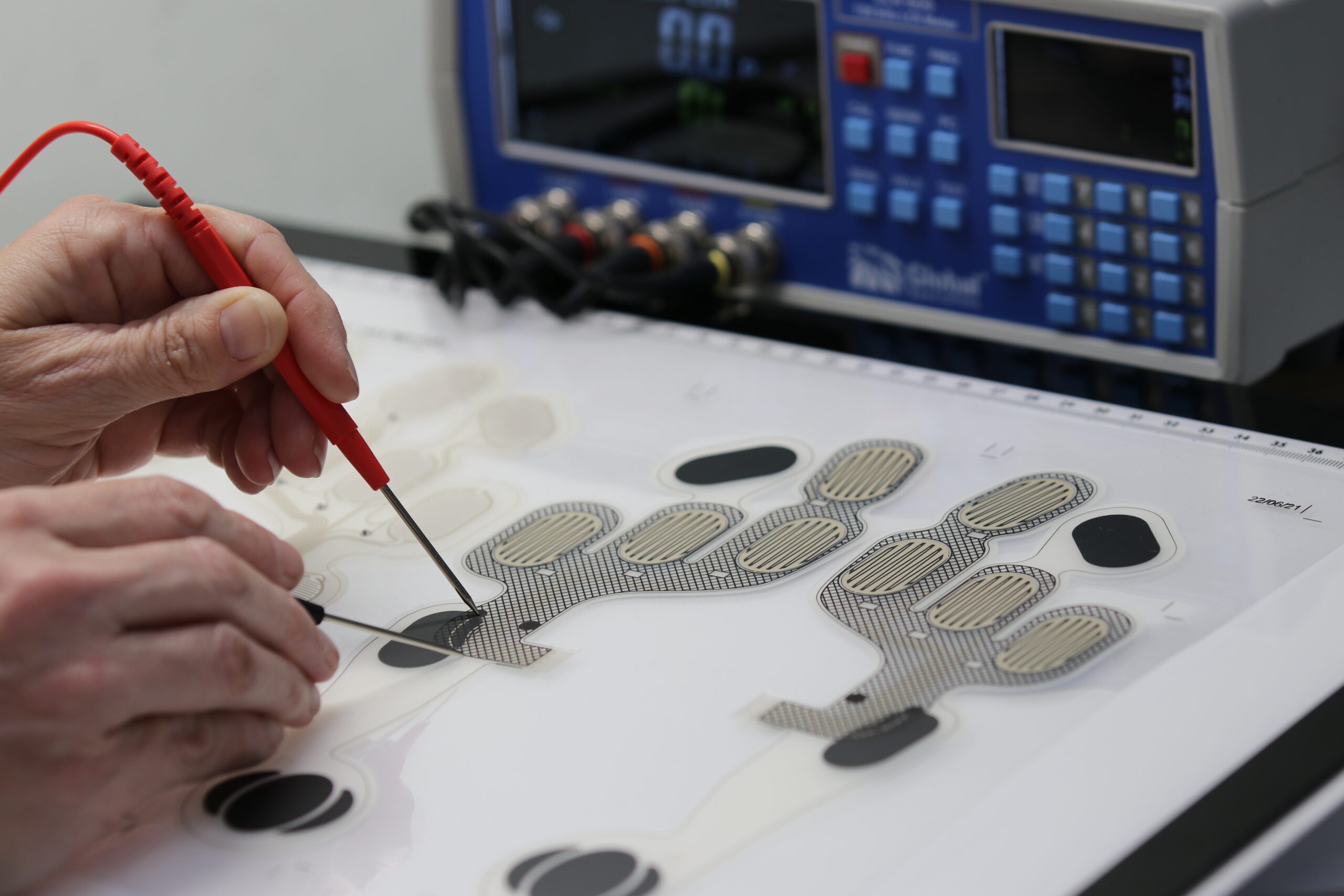
Wearable & Stretchable Printed Electronics
Ultra-thin printed sensors and stretchable circuits that bend, stretch and conform to the body. Designed and manufactured in Brisbane for medical, sports-science and wearable applications.
Smart & stretchable printed electronics, built for the body
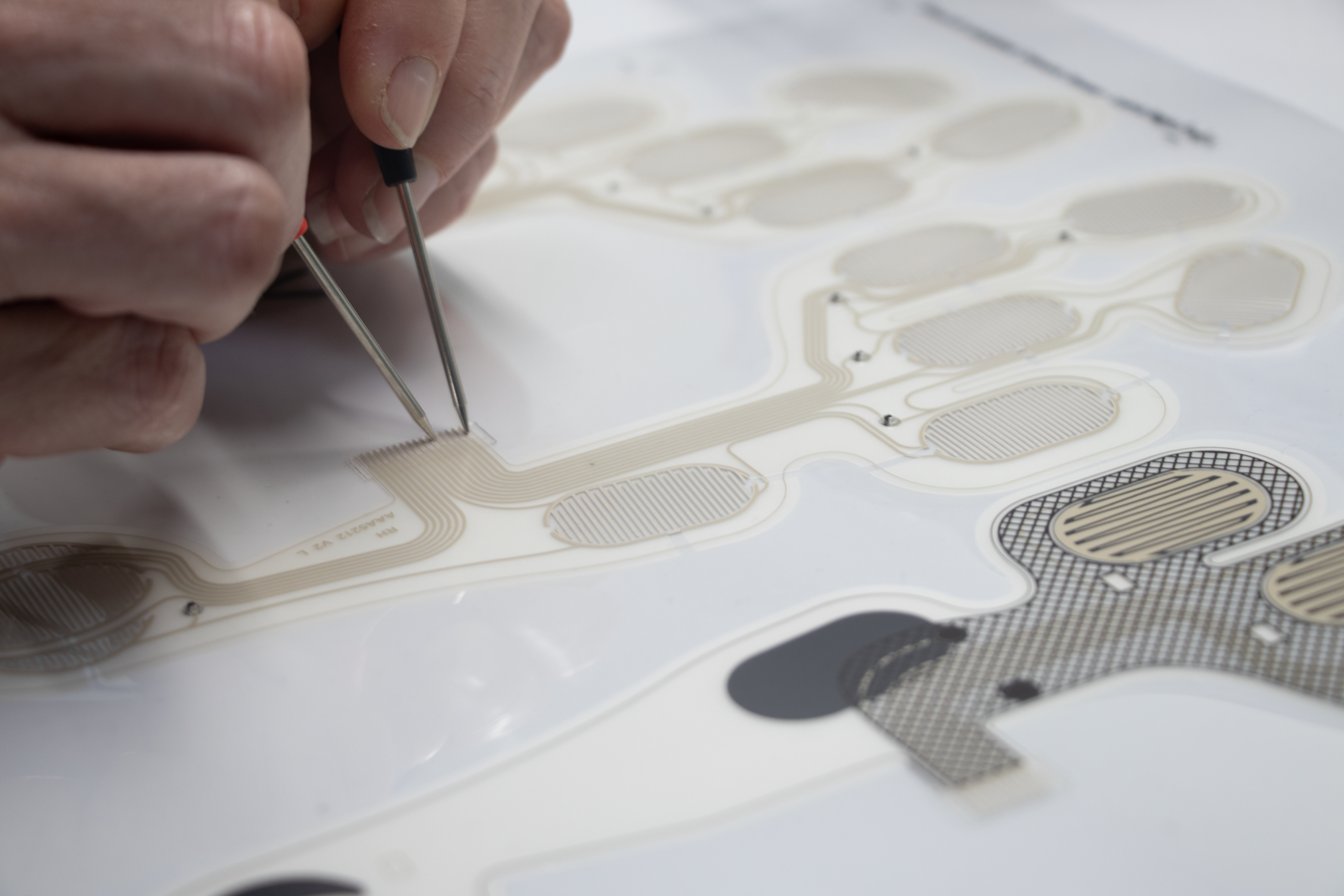
Most electronics need a rigid board. Ours do not. We produce low-power circuitry that conforms to irregular shapes and surfaces, including devices worn on the human body, by printing conductive inks onto thin, flexible and stretchable substrates.
Smart, stretchable, ultra-thin electronics open up flexible sensors for wearable apparel, medical devices and motion analysis. By using low-temperature curing inks formulated for flexible substrates, we build sensors that bend and stretch with the body while staying reliable. We are also actively pursuing opportunities to extend this capability into defence wearable applications.
What we make
Stretchable circuits
Conductive traces printed on elastomeric substrates that stretch and recover with movement.
Flexible printed sensors
Ultra-thin sensors on flexible film for pressure, force, temperature and motion sensing.
Wearable sensor patches
Low-profile printed assemblies that sit against or inside a product, worn on the body.
Force & pressure sensing
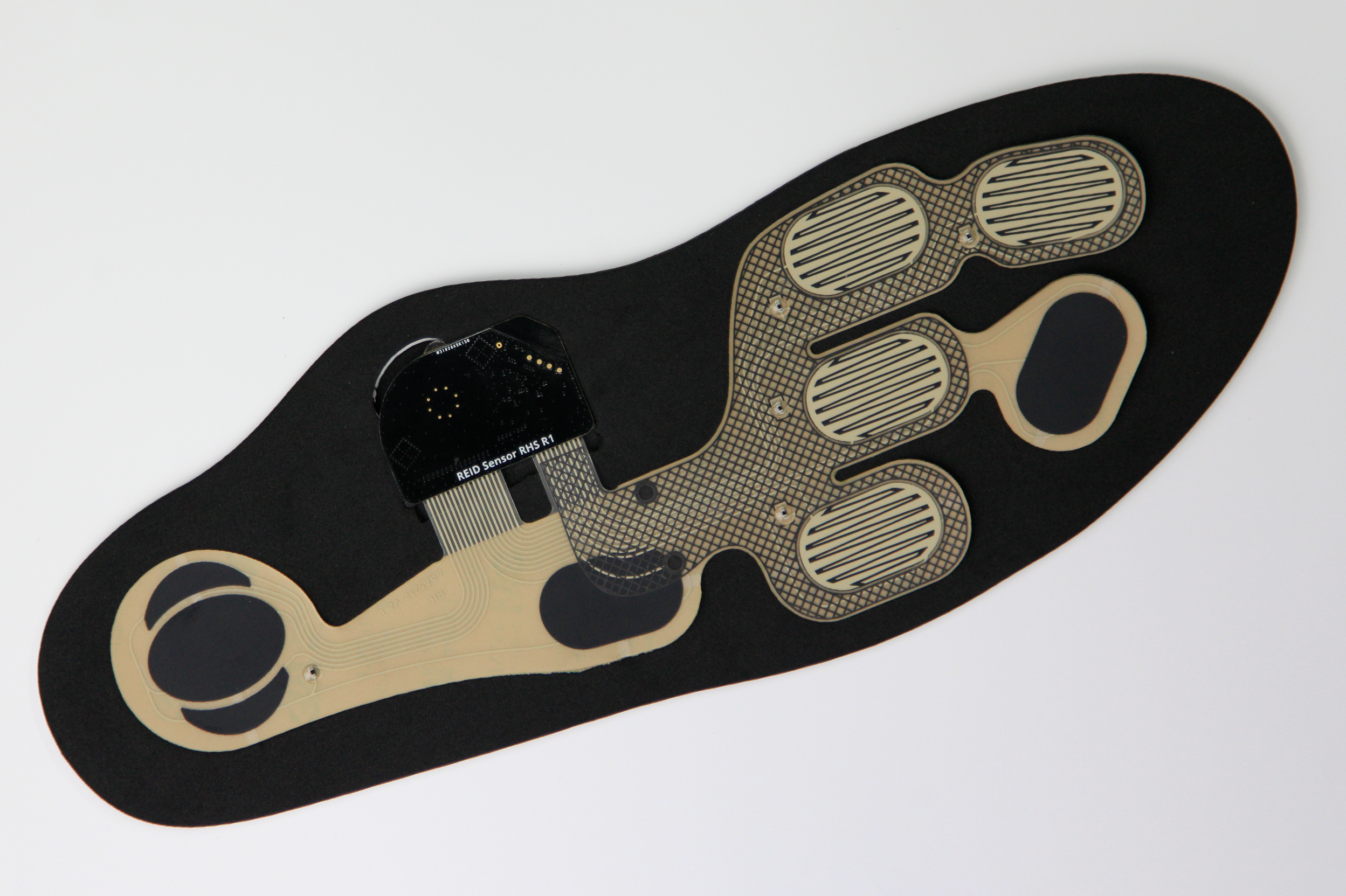
Printed force and pressure arrays for biomechanical, orthopaedic and motion-analysis data.
Sensor integration
Printed circuitry designed to carry surface-mounted components and connectors, with terminations for solder tabs.
Prototype to production
Small prototype batches for testing an idea, then scale to volume, with no minimum order constraints.
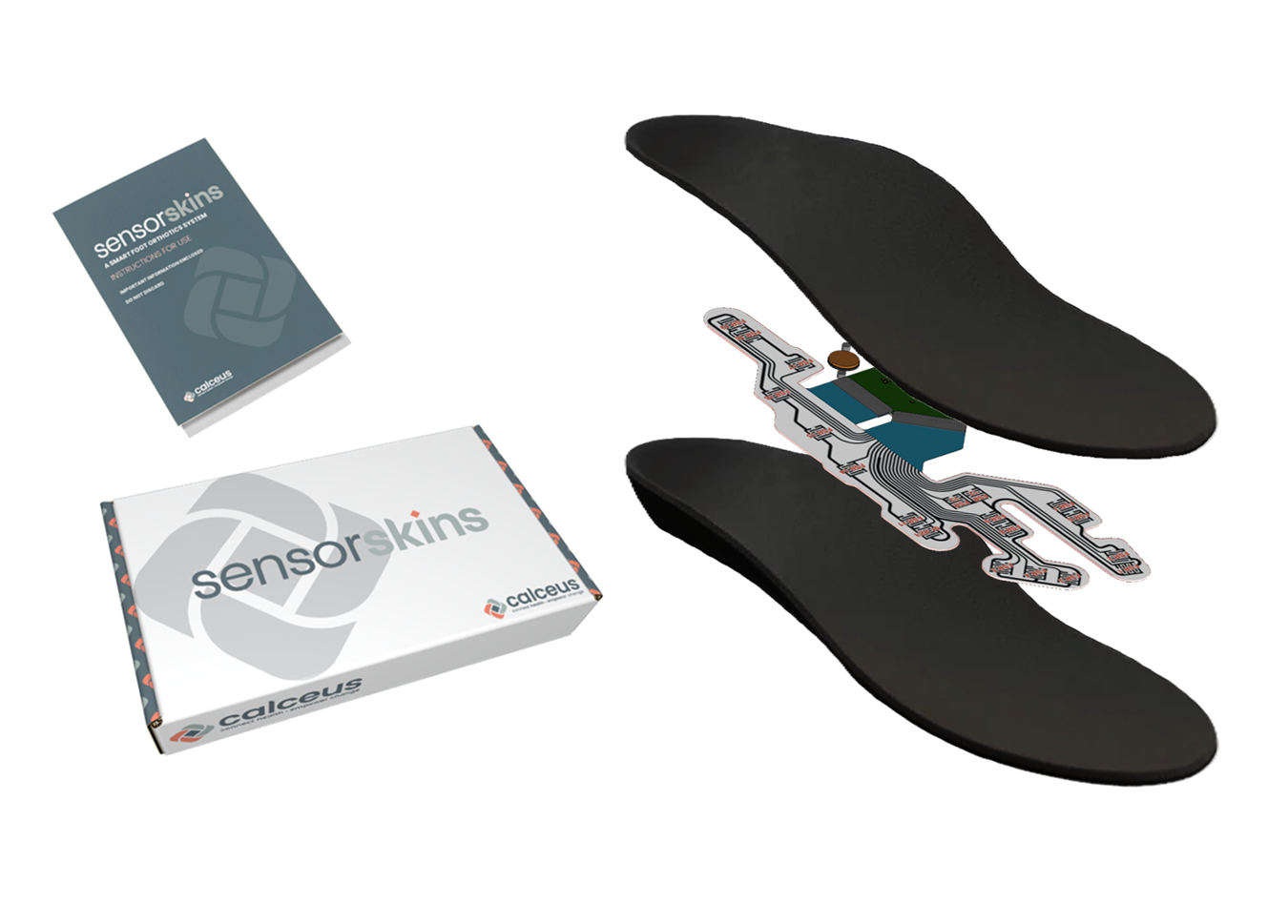
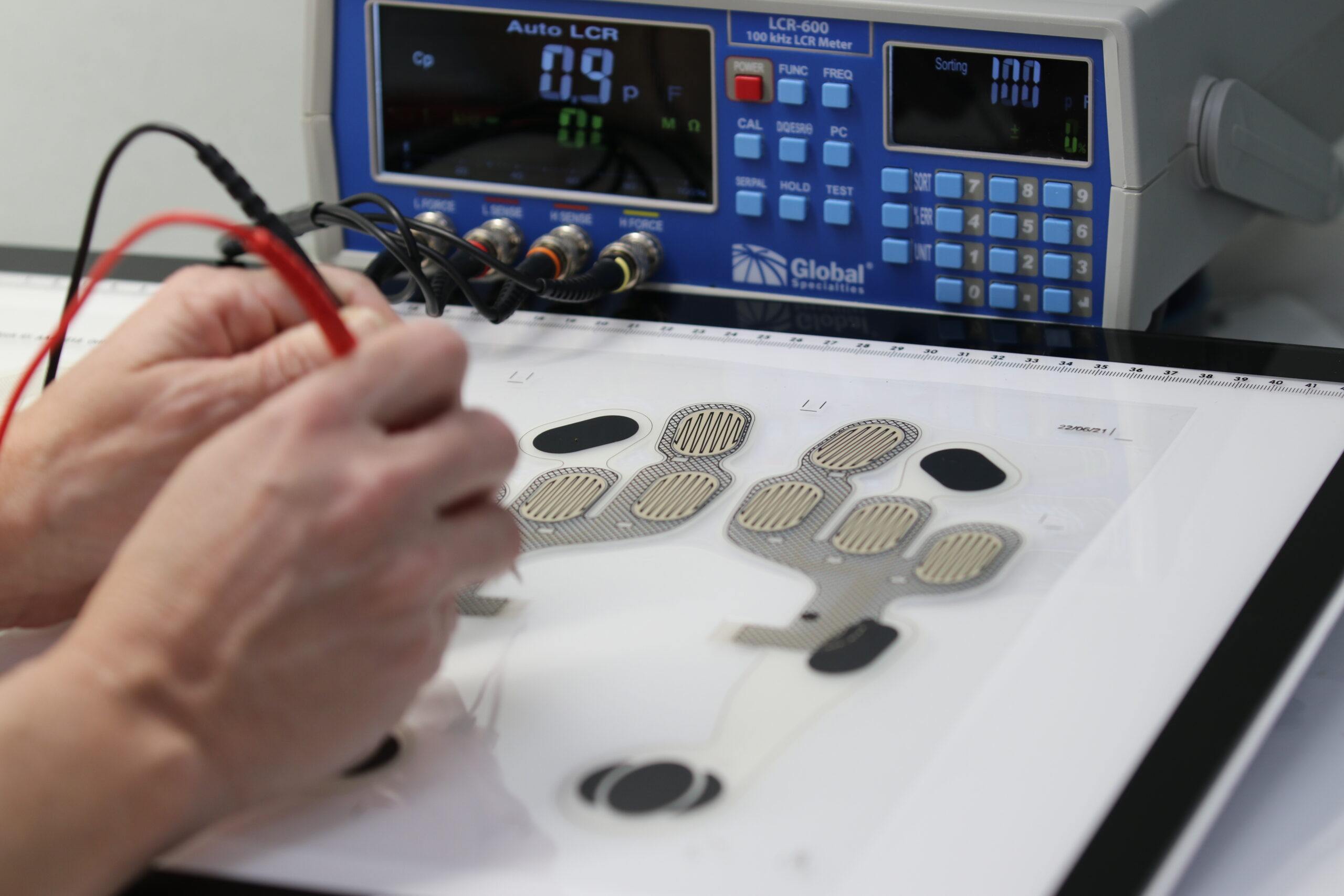
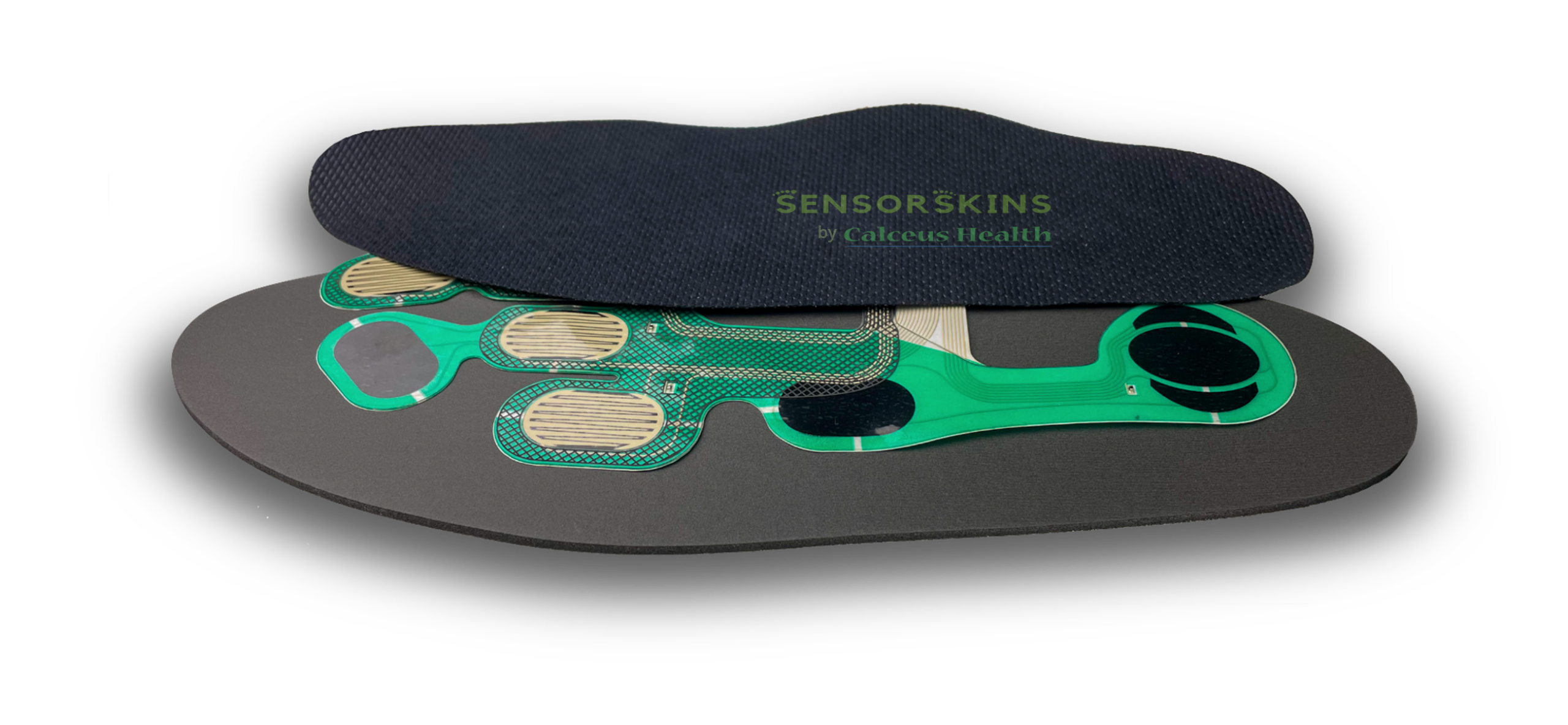
Sensor Skins is a wearable health-monitoring device built into an insole. It measures plantar pressure, friction, temperature and motion through an onboard inertial measurement unit, giving podiatrists, physiotherapists, diabetes-care clinicians and researchers continuous real-world data from the foot. Reid Print Technologies designs and manufactures the printed sensor technology at the heart of the device.
Building a sensor thin and flexible enough to sit inside an insole, yet durable enough for daily clinical and research use, is exactly the kind of printed-electronics challenge Reid is built for. The work is carried out in our ISO 9001 and ISO 13485 certified facility, the same medical-grade manufacturing environment behind our Memphasys IVF electrode sensor program, now in serial production for the Memphasys Felix IVF device.
The underlying printed-sensor technology is protected by a granted United States patent, with Australian and New Zealand patent applications pending and expected to follow.
Why printed & stretchable
Conforms to the body
High conformity to bending, suited to devices that move such as the human body, and to irregular shaped surfaces.
Ultra-thin & light
A thinner profile than rigid components suits compact devices and unobtrusive, comfortable wear.
Design freedom
More design possibilities than rigid boards, with the circuit able to bend to its desired applicable shape.
Durable in real use
Easier to prepare for harsh environments, internal or external, for reliable daily clinical and field use.
Materials & manufacturing
Stretchable inks & substrates
Stretchable conductive inks on elastomeric substrates, with low-temperature curing inks formulated for flexible films.
ISO 9001 & ISO 13485
A quality-certified, medical-device certified facility, the same environment behind our long-running medical programs.
Digital & screen printing
Combined digital and screen printing processes take a design from prototype batch to full-scale production.
Testing an idea first? We produce small prototype batches for validation before you commit to volume.
Where wearable electronics are used
Printed Wearable & Stretchable Sensors

Wearable electronics FAQs
What are stretchable printed electronics?
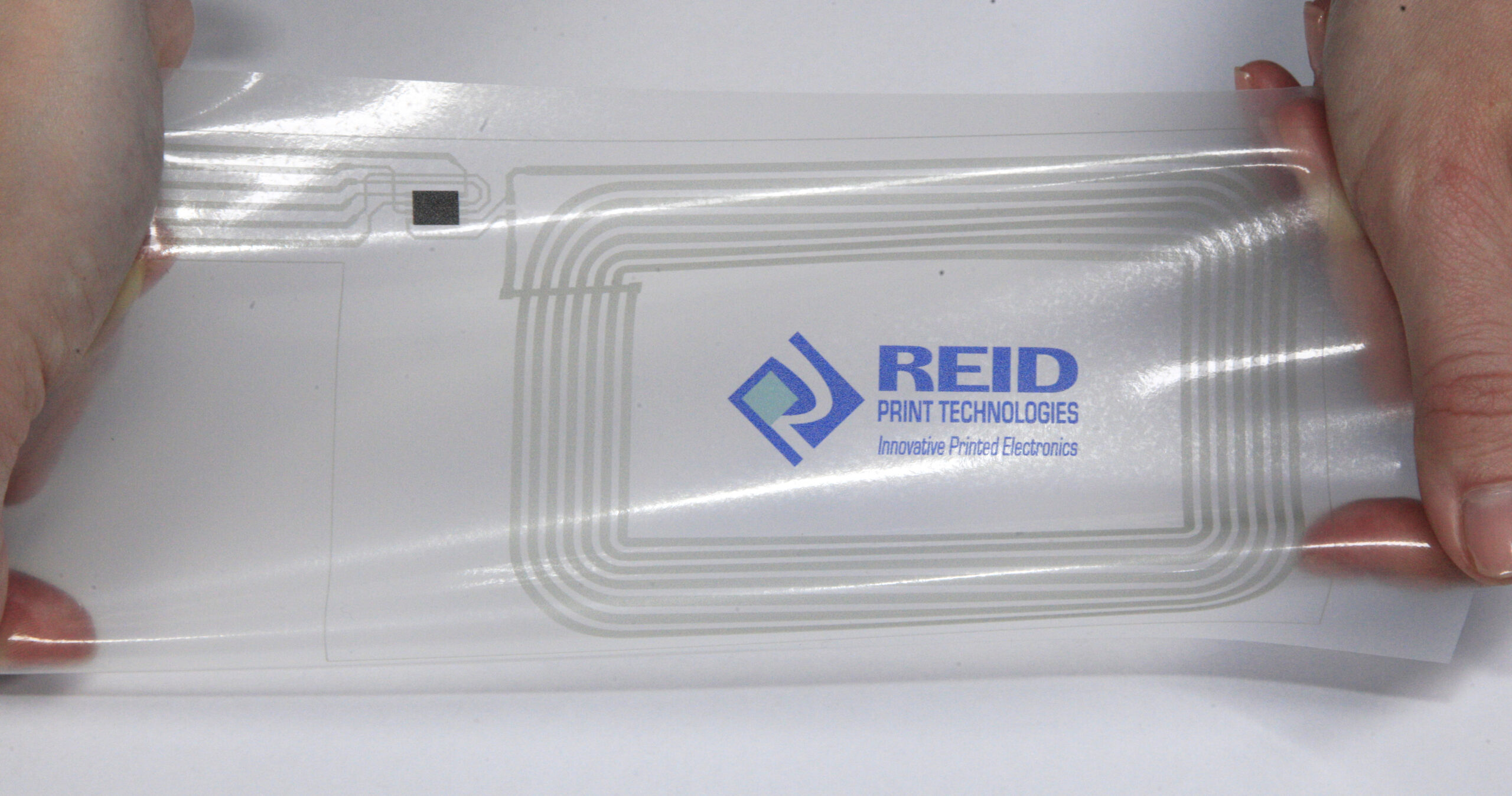
Stretchable printed electronics are circuits printed with conductive inks onto flexible, elastic substrates, so they can bend, stretch and conform to irregular surfaces, including the human body, while continuing to work.
Can you make wearable sensors?
Yes. We design and manufacture ultra-thin flexible and stretchable sensors for wearable devices, including pressure, force, temperature and motion sensing, on substrates thin enough to sit against or inside a product.
What substrates and inks do you use?
Flexible and stretchable substrates with low-temperature curing conductive inks formulated for those materials, so the printed circuit flexes and stretches with the body without cracking.
What are wearable printed sensors used for?
Medical devices, sports science, orthopaedics, motion analysis, physiotherapy, podiatry and health monitoring, among other applications.
Are you set up for medical-device manufacturing?
Yes. Our facility is ISO 9001 and ISO 13485 certified. Reid Labs also runs a long-standing medical-device program, our Memphasys IVF electrode sensor now in serial production for the Memphasys Felix device, as a proven example of our medical-grade manufacturing.
Can you make a small batch to test first?
Yes. Our digital and screen printing let us produce prototype batches in small quantities for testing before scaling to full production.
Do you manufacture in Australia?
Yes. Designed, printed and finished at our facility in Brisbane, Australia.
Need a wearable sensor designed
and made in Australia?
Tell us what you want to measure and where it needs to sit on the body, and our Brisbane engineers will take it from there.