
PTC Heaters
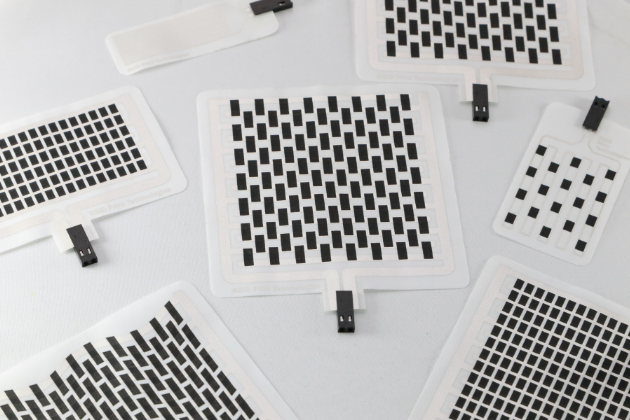
Custom printed PTC heaters designed to settle at the temperature your application needs. Paper-thin, made to order, designed and manufactured in Brisbane.
Printed heaters that settle where you design them
A PTC heater is a Positive Temperature Coefficient heating element printed onto thin, flexible film, so the material itself becomes a paper-thin heater. As it warms, its resistance rises, which limits the current it draws and slows further heating, so the element tends toward a stable temperature rather than climbing indefinitely.
That behaviour comes from the ink, and the same PTC ink systems are available to every manufacturer. What decides whether an element settles at the temperature you need is the design around it: the element geometry, the voltage you have available, and how the assembly sheds heat. Reid works that out before printing rather than after.
This is the home of Reid's printed-heater capability, from concept and prototype through to full production, all under one roof.

Why printed PTC heaters
Self-regulating by design
Resistance rises with temperature, so the element settles rather than running away. Where it settles is set by the design, not by the ink alone, which is the part we work out with you up front.
Ultra-thin
Printed onto thin flexible film, the heater is paper-thin and adds negligible thickness or mass to the assembly it sits in.
Durable in extreme environments
Built to keep working reliably in demanding conditions where a controlled temperature has to be maintained.
Simple integration
Conforms to curved surfaces and wraps around tubes or components, so it fits your design rather than requiring a flat face or a machined heater block.
Made to order
Shape, size, heated area, design temperature and connection are all specified to your application.
Low-cost
A printed element is an economical way to add controlled heat, and often needs no separate control circuit to design, source and fit.
Battery-operated
Designed for low-voltage operation, so the same element suits portable, wearable and remote, battery-powered equipment.
Full specifications are published in our PTC Flexible Heaters data sheet, available on the Downloads page.
Heat that finds its level
A PTC element is printed as conductive tracks on a flexible film. When power is applied it warms up, and as it warms its electrical resistance rises. That rising resistance limits the current the element can draw, so it naturally slows its heating as it warms and settles toward a stable temperature.
For many applications this self-regulating behaviour matters more than raw heating power: the goal is a modest, stable temperature maintained over time rather than a fast ramp to a high setpoint. Because the element limits its own current as it warms, many applications need no separate control circuit at all. Where a setpoint has to be held within a tight band, simple control electronics alongside the element may still be the right answer, and that is a question we settle at design stage rather than at prototype stage.

What determines whether a printed PTC heater works
Printed PTC heaters are not a drop-in replacement for wire-wound or silicone elements. They win on thickness, conformability, weight and integration, and they lose in specific, predictable situations. Six things decide which.
Reid models the heater before it goes to print, working out track geometry and power density against the substrate and the target temperature. That means the first article arrives close to specification rather than being tuned by trial and error across successive samples.
Available voltage
The temperature an element reaches is set by the power delivered into it, and that ceiling is fixed by your supply. Battery-powered designs are where this bites hardest: a target temperature that is straightforward on mains can be unreachable on a single-cell lithium battery, regardless of how the element is patterned. This is the most common reason a printed heater concept fails, and it is knowable before anything is printed.
Current the conductors can carry
The heating element is only half the design. Printed silver busbars feed current into it, and they have a finite carrying capacity set by their width, thickness and length. An element that is thermally correct can still be starved by conductors that are too narrow, and the symptom looks like an element problem rather than a supply one.
Power concentration
Total power and power density are different things. The same wattage spread over a smaller active area produces hot spots rather than more heat, and the average temperature can look correct while the surface is uneven. Where the available area is fixed, this becomes the constraint that decides whether a target is reachable at all.
Where the element settles
PTC inks increase in resistance as they warm, so an element tends toward an equilibrium rather than climbing indefinitely. But the temperature it settles at is a design outcome, not a property of the ink. It depends on the ink system, the element geometry, the drive voltage and how the assembly sheds heat. Where a specific setpoint must be held within a tight band, the honest answer is often that the element needs simple control electronics alongside it. We would rather say that at the start than have it discovered at prototype stage.
Surface geometry
A printed heater wraps comfortably around a cylinder, a tube or a gentle radius. Compound curvature is harder: a film that must stretch in two directions at once will wrinkle, and wrinkles put the element out of contact with the surface it is meant to heat, which shows up as uneven temperature. Some shapes suit forming, some suit a different heater architecture, and some do not suit printing at all.
Uniformity requirement
Even heat across the element is achievable, but the tolerance you need drives the design. A flat element is inherently easier to make uniform than a formed one. If your specification calls for a narrow variance across the heated area, that needs to be a design input from the beginning rather than something checked at the end.
We would rather tell you early
None of these are discovered by building samples and measuring them. They are all predictable from the requirement. We work through them with you at concept stage, before tooling, and we will tell you when the numbers do not support the design. Sometimes that means the answer is a different heater technology, or no heater at all. That conversation costs a phone call. Finding out after two prototype rounds costs considerably more.
Where PTC heaters are used
Printed PTC heaters show up wherever a thin, flexible, self-regulating source of controlled heat is useful, from de-icing and defogging to heated apparel and holding a stable temperature inside instrumentation. They serve heavy industry and body-worn products alike.
Condensation control in breath-analysis instrumentation
Moisture is a recurring design problem in instruments that sample exhaled breath. Breath leaves the body warm and effectively saturated, so where it meets a cooler sample path it condenses — and condensate in the sample tube can interfere with the measurement.
Reid was engaged by an instrument developer to produce a printed PTC heater for exactly this requirement: hold a small-diameter sample tube above the temperature at which breath moisture condenses. The element was printed onto thin flexible film and wrapped directly around the tube, conforming to its curvature rather than requiring a flat mounting face or a machined heater block, and adding negligible diameter or mass to the assembly.
The element uses parallel resistive tracks bridging a pair of printed silver busbars, so the heated area is distributed across the wrap rather than concentrated in a single serpentine path.
For this class of application the self-regulating characteristic matters more than heating power. The requirement is a modest temperature held indefinitely, not a fast ramp to a high setpoint. A PTC element rises in resistance as it warms and settles toward an equilibrium, and at the modest setpoints this class of instrument needs, that behaviour can carry the design without a separate thermostat or feedback loop — removing a control circuit from the instrument and reducing the scope for an over-temperature condition to reach the sample path.
Bringing a requirement rather than a finished drawing is how Reid Labs works.
Printed PTC Heaters


PTC heater FAQs
What is a PTC heater?
A PTC (Positive Temperature Coefficient) heater is a printed heating element whose electrical resistance rises as it warms. Reid prints the element onto thin, flexible film so the material itself becomes a paper-thin heater, made to order in a range of shapes, sizes and design temperatures.
What does self-regulating mean, and do I need a thermostat?
As a PTC element heats, its resistance increases, which limits the current it draws and slows further heating. The temperature it settles at depends on the ink system, the element design, the drive voltage and how the assembly sheds heat, so it is a design outcome rather than a fixed property. Many applications need no separate control at all. Where a setpoint has to be held within a tight band, the element may need simple control electronics alongside it, and we will tell you which case you are in at concept stage.
How thin and flexible are they?
They are printed onto thin flexible film, so they are paper-thin and add negligible mass. They can conform to curved surfaces or wrap around a tube rather than needing a flat mounting face or a machined heater block.
Can a PTC heater run on a battery?
Yes. Elements can be designed for low-voltage, battery-operated use, which suits portable, wearable and remote equipment.
What are PTC heaters used for?
Applications span industrial, automotive, mining, aerospace and IoT equipment as well as apparel, sports, wearable and medical products, including de-icing, defogging and holding a controlled temperature in instrumentation.
Can I get a custom size, shape or temperature?
Yes. Every heater is made to order. Shape, size, heated area, design temperature and connection are all specified to your requirement.
Do you manufacture in Australia?
Yes. Reid's PTC heaters are designed, printed and finished at our facility in Brisbane, Australia.
Need a heater designed
and made in Australia?
Tell us the temperature you need to hold and the surface it has to sit on, and our Brisbane engineers will design a PTC heater to your requirement.