Printed Electronics.
Functional inks printed onto thin, flexible film — so the material itself becomes the circuit, the sensor or the heater. Designed and manufactured in Brisbane.
What printed electronics actually is
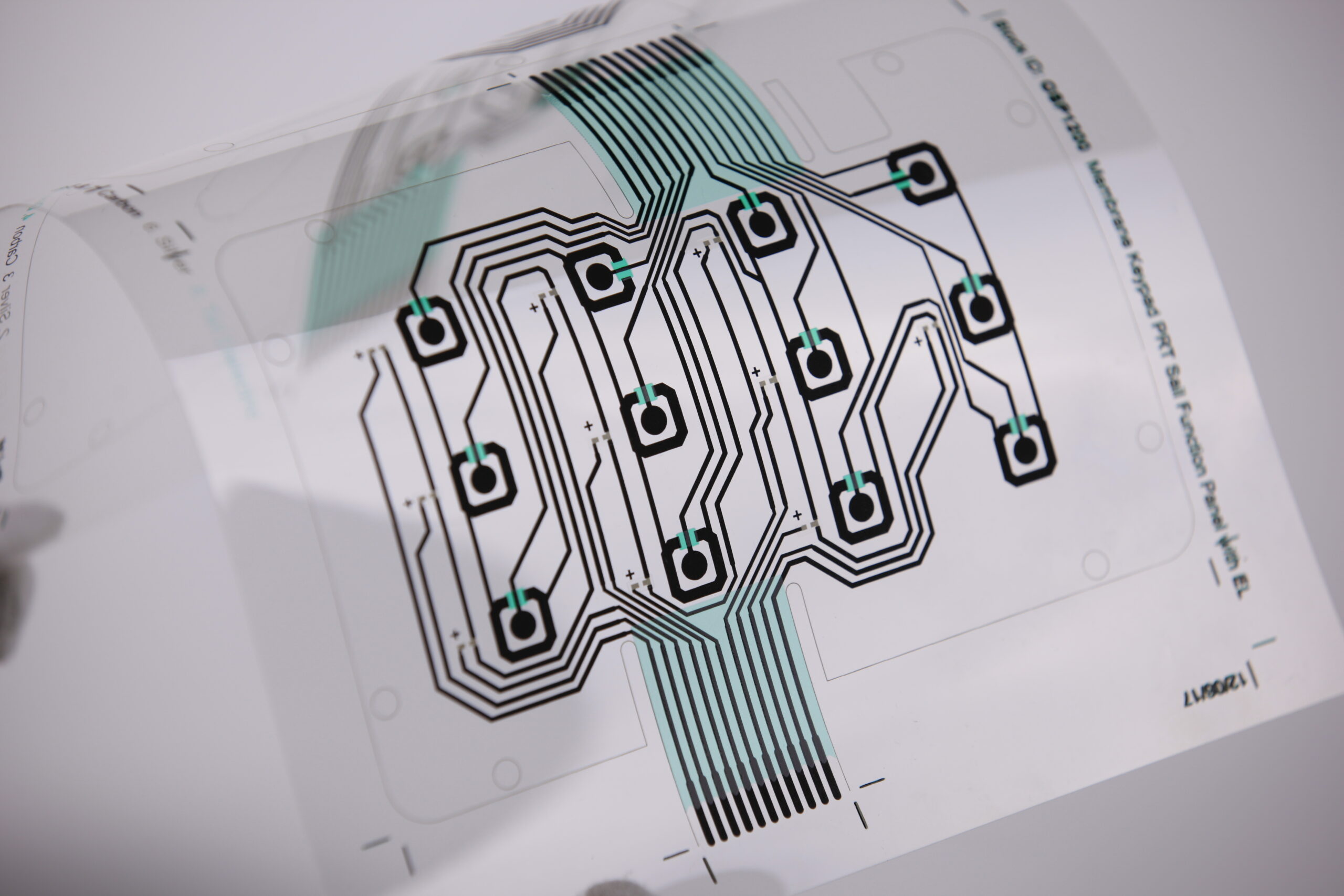
Conventional electronics assembles a circuit from discrete components fixed to a rigid board. Printed electronics does the opposite: conductive and functional inks are printed directly onto a thin, flexible substrate, and the printed layer itself carries the function — a conductor, a sensor, a heating element or an antenna. What comes off the press is electronics that are paper-thin, flexible, light, and shaped to the product instead of the product being shaped around them.
Why print the function in?
A printed element earns its place when thinness, conformability or weight decide the design — and when the economics of prototyping and low-to-mid-volume production favour printing over hard tooling. It isn't a drop-in for every component; it wins in specific, predictable situations.
Thinness
A printed layer is effectively part of the surface it sits on. Where a discrete part adds height and mass to a stack, a printed conductor, sensor or heater adds almost none.
Conformability
Printed on flexible film, the element wraps around a curve, a tube or a gentle compound surface — fitting the product's geometry instead of forcing a flat mounting face into the design.
Weight
Removing the rigid board, the housing and the fasteners a discrete part needs takes mass out of the assembly. That matters most in wearable, portable and airborne equipment.
Integration
The function is printed into the assembly rather than bolted onto it: fewer connectors, fewer parts to place, and a sensor or heater already in contact with the surface it has to read or warm.
Tooling economics
Printing carries little fixed tooling cost, so prototypes, design iterations and low-to-mid-volume runs don't have to absorb the price of hard tooling before the first good part exists.
Five printed-electronics product families
Each has its own page — the full capability, the applications it suits, and where printing does and doesn't win.

UHF & RFID Antennas
Flexible antennas printed on polyester film — low-resistance traces and easy adhesive application, from low frequencies up to UHF. For defence, aerospace, IoT and asset tracking.
Learn More →
Wearable & Stretchable Electronics
Ultra-thin printed sensors and stretchable circuits that bend, stretch and conform to the body — for medical, sports-science and wearable applications.
Learn More →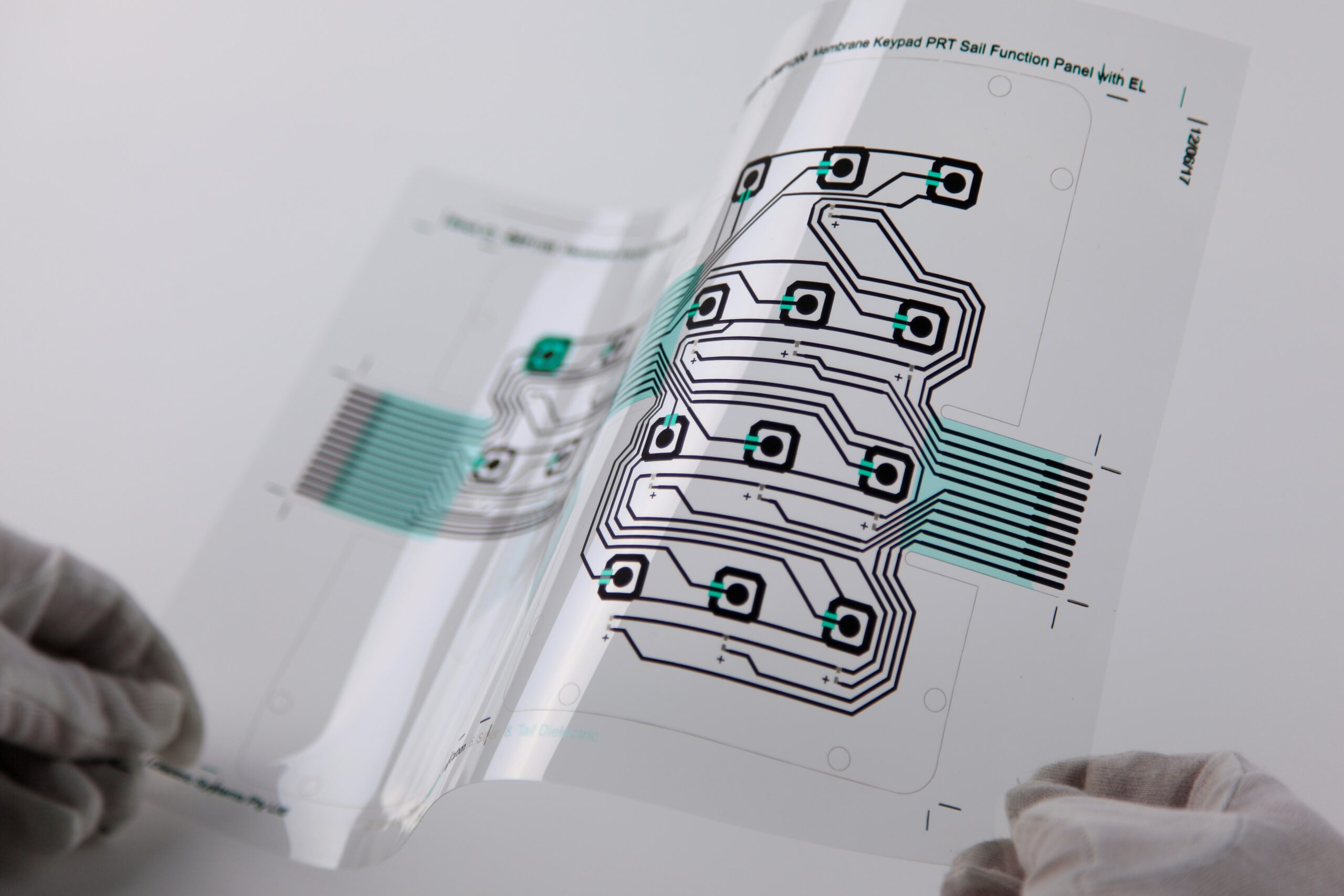
Flexible Printed Sensors
Custom sensors printed on flexible film, with embedded sensor chips and printed circuits — the printed-sensing capability behind Reid's specialised sensor products.
Learn More →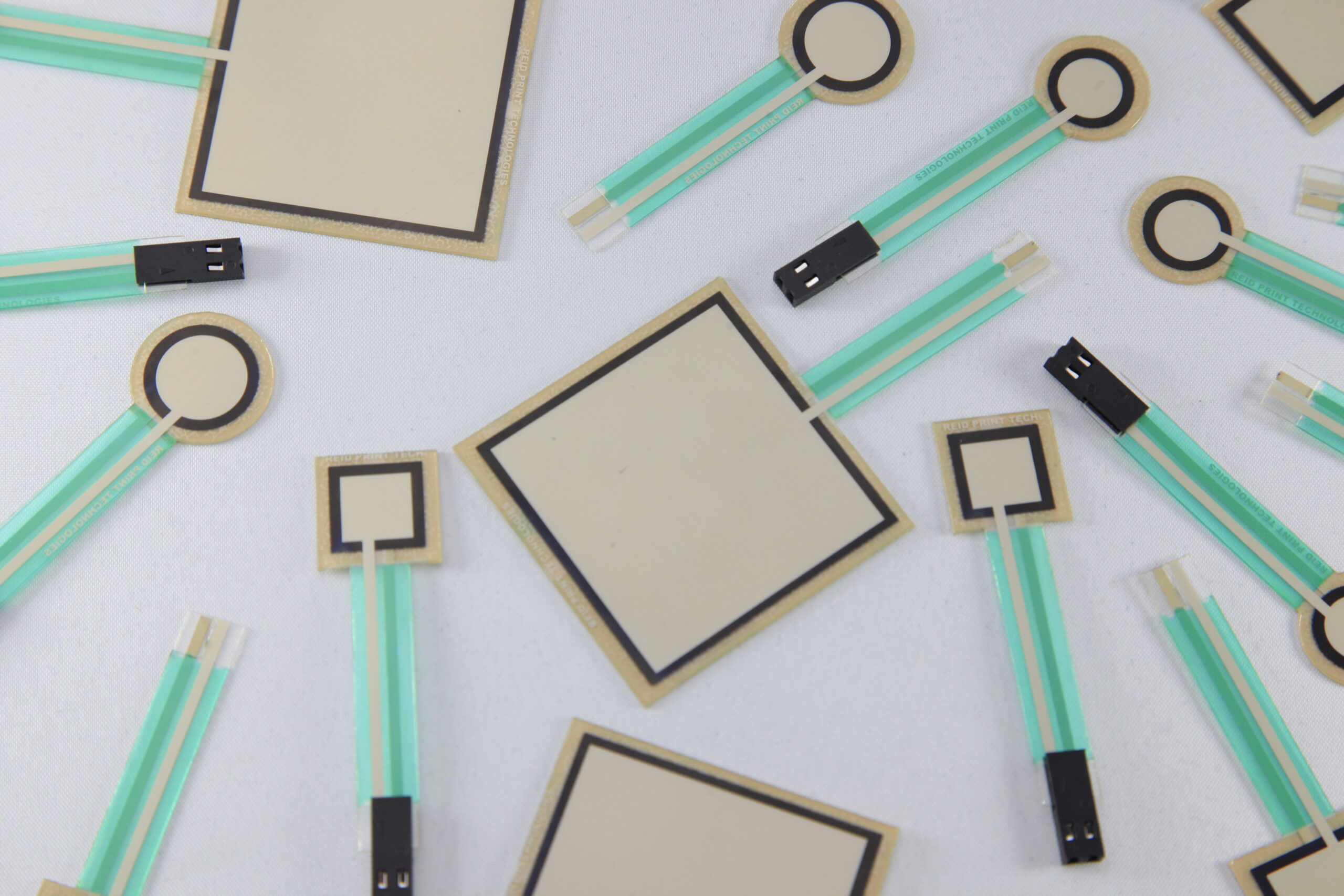
Force Sensing Resistors
Printed resistors that measure force and pressure by changing resistance under load — made to order in a range of sizes, shapes and resistances.
Learn More →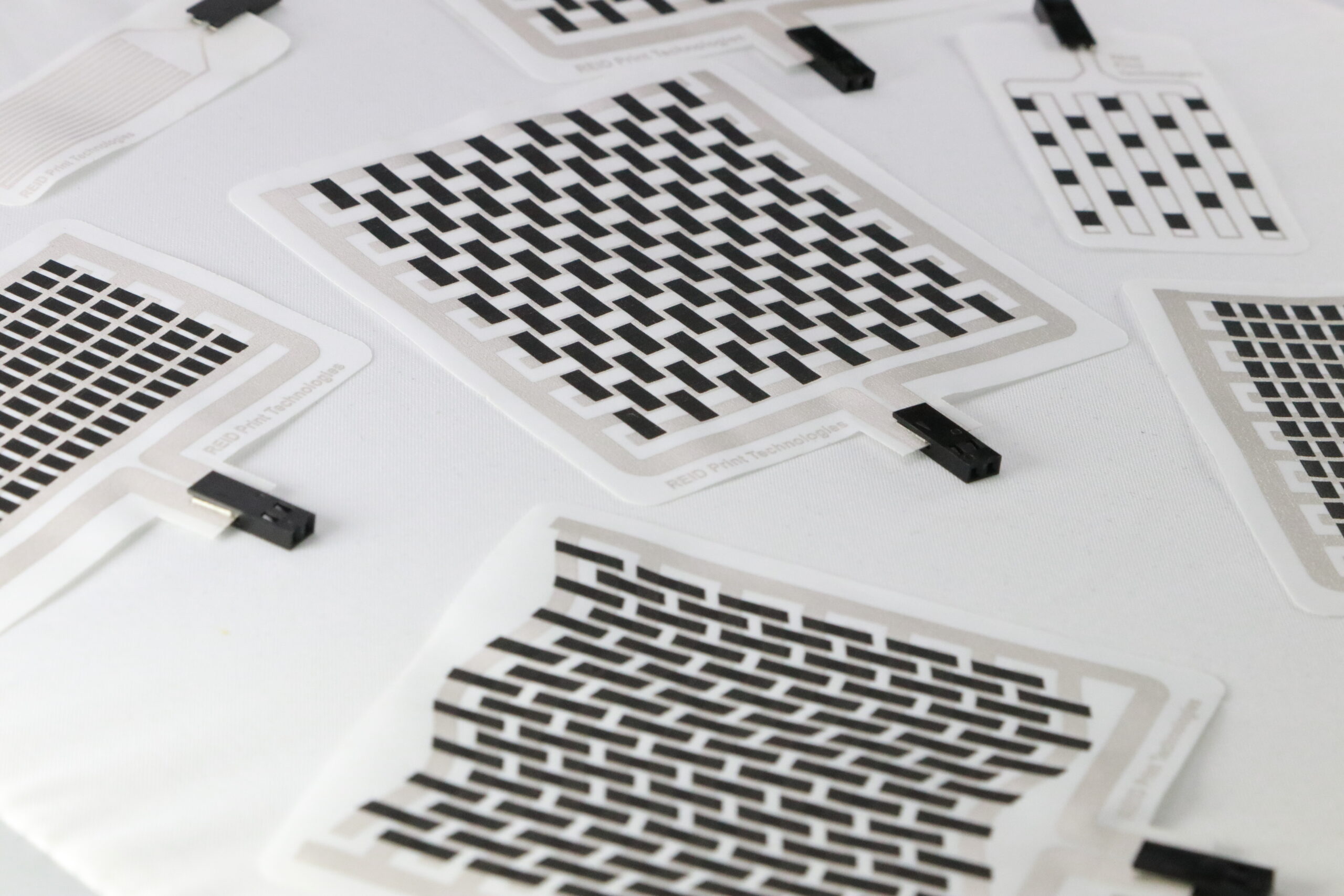
PTC Heaters
Printed heaters that settle at a stable temperature as they warm — paper-thin, flexible and made to order.
Learn More →One capability, one facility
Different products, but the same way of working behind all five.
Made in Brisbane. Every product here is designed, printed and finished under one roof at Reid's Brisbane facility. Australian made and owned.
Made to order. Nothing on this page is off-the-shelf. Shape, size, materials and electrical behaviour are all specified to your application.
Certified quality systems. Manufactured under quality management systems certified to ISO 9001 and ISO 13485, the medical-device standard.
Registered on JOSCAR-AU. Reid is registered on JOSCAR-AU, the supplier register for the defence and aerospace sector.
Reid Labs for development-stage work. When you bring a requirement rather than a finished drawing, development-stage work runs through Reid Labs.
Not sure which process
fits your part?
Bring us the requirement — a drawing, a problem, or the environment it has to survive — and our Brisbane engineers will tell you what is printable.